Solar Eclipse
-
When Aerosol Particles Tip the Balance: The Atmosphere’s New Feedback and Storm Initiation
Overview of SAMF: The Subcritical Aerosol-Moisture Feedback The Subcritical Aerosol-Moisture Feedback (SAMF) is a 📖 newly proposed framework that explains how aerosols and moisture interact when the planetary boundary layer (the lowest ~1 km of the atmosphere affected by Earth’s surface) exists in a subcritical state, before deep convection (intense, sustained vertical motion) begins. In… Continue reading
-
Seminar Video: Discovery of the Subcritical Aerosol-Moisture Feedback (SAMF)
I recently presented a seminar about my experiences during the 8 April 2024 solar eclipse that explains how SAMF emerged from my data analysis of this event. The seminar is geared toward a general audience, but it presents a good overview for scientists. I’ve embedded the video below; you may want to use the full… Continue reading
-
A Layman’s Guide to the Subcritical Aerosol-Moisture Feedback
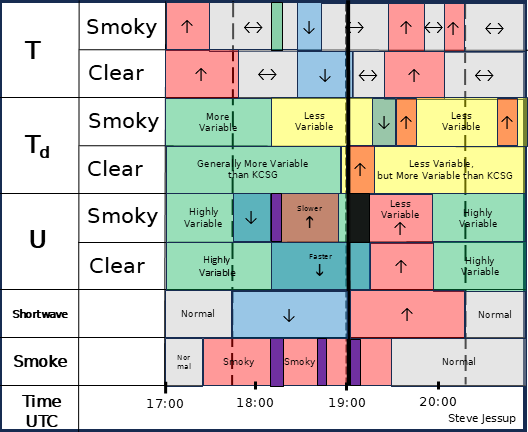
Introduction In my recent study of the April 8, 2024 North American Solar Eclipse, I was fortunate to witness a rare event: a solar eclipse obscured by smoke. As a meteorologist, my natural curiosity revolved around how the smoke affected the weather. Eclipses produce a unique weather response, lowering the temperature as the moon covers… Continue reading
-
Through the Haze: Origin Story of the Eclipse (SAMF) Paper (Jessup and Enfinger, 2025)

Introduction As I was growing up, it was the overwhelmingly large snowfall totals from several nor’easters that shaped my mental landscape about the weather. But while most meteorologists track their interest in weather to an impactful or severe weather event that affected them personally, for me, it was one time that it didn’t snow that… Continue reading
-
Smoke Eclipse Study Unveils Proposed Subcritical Aerosol-Moisture Feedback (SAMF)
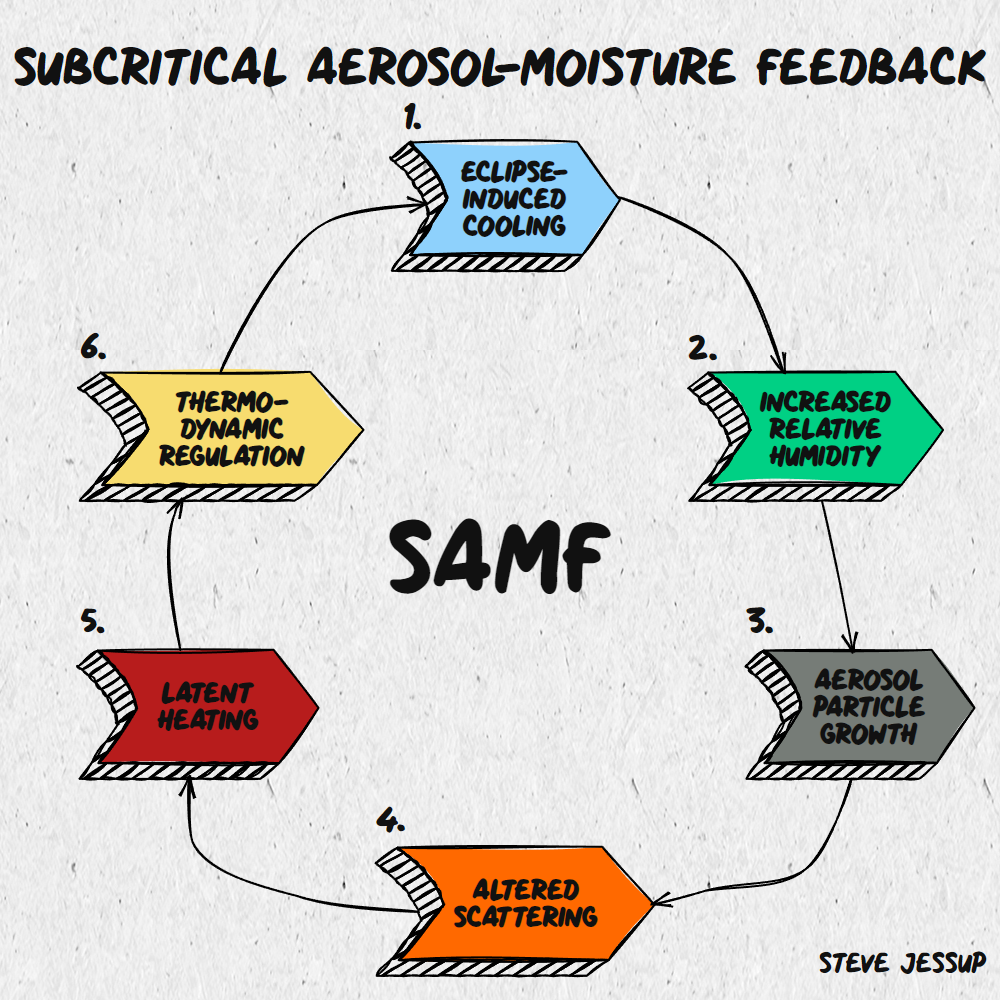
Introduction In the recently-published article, “Effects of Smoke on Surface Observations, Turbulence, and Proposed Subcritical Aerosol-Moisture Feedback (SAMF) During the 8 April 2024 Solar Eclipse in Columbus, GA, USA”, my co-author and I present an analysis of how smoke from a prescribed burn modified surface meteorological observations and boundary-layer turbulence during the total solar eclipse🎵… Continue reading